


Backyard Pickleball Court ROI: Is Building a Court Worth the Investment in 2026?
The question comes up in almost every consultation. The court sounds appealing, the lifestyle case is easy to make, but at some point the conversation turns practical: is this actually worth the money?
It's a fair question. A professionally built pickleball court is a significant investment, and like any significant investment, it deserves an honest answer rather than a sales pitch.
Here's the honest answer.
What a Backyard Pickleball Court Costs in 2026
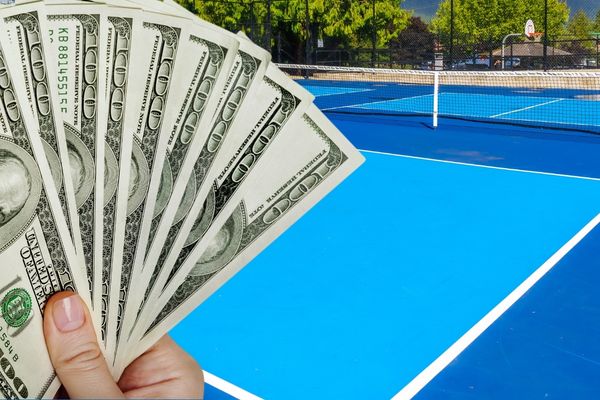
In the Scottsdale and Phoenix area, professionally built pickleball courts range from $25,000 to $70,000 depending on the foundation type, surface specification, lighting, shade infrastructure, and site preparation requirements.
A standard rebar-reinforced build with a professional acrylic coating system sits at the lower end of that range. A post-tension build with lighting, shade, and custom personalization sits higher. Most residential builds in the Valley land somewhere in the $35,000 to $55,000 range for a complete, professional installation.
That number is the starting point for evaluating ROI, not the ending point.
The Property Value Argument
The most concrete financial case for a backyard pickleball court is what it does to your property value and the evidence here is stronger than most homeowners expect.
Custom home builders across the Scottsdale and Phoenix market are actively adding pickleball courts as standard features in luxury builds. That's not a trend — it's the market signaling that a court at a certain price point is an expected amenity, not a bonus. When builders include courts as standard features, they're reflecting buyer demand, and buyer demand drives appraised value.
Real estate agents in the Valley consistently report that outdoor sport courts, particularly pickleball courts, are among the most commented-on features during showings at properties above the $800,000 mark. A well-built, well-maintained court in a desirable neighborhood adds measurable value to a listing and reduces time on market.
The documented asset angle matters here too. A court built to a named, documented standard, with compaction records, completion certificates, and a transferable warranty, is a different asset than an undocumented build. Buyers at the luxury end of the market respond to documentation. It signals that the property was maintained with intention and that the court represents a genuine upgrade rather than a DIY project.
The Airbnb and Short-Term Rental Case
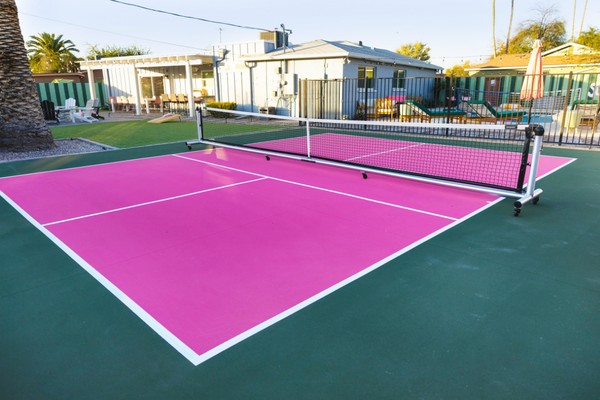
For property owners in the short-term rental market, the ROI case for a pickleball court is arguably the strongest available.
Short-term rental hosts across Arizona who have added pickleball courts are reporting meaningful increases in both nightly rates and booking frequency. In a competitive Airbnb market where differentiation is everything, a private pickleball court is a genuinely rare amenity that appears prominently in search filters and drives direct bookings from players traveling specifically to access courts.
The math is straightforward. A $45,000 court that allows a host to increase their nightly rate by $75 to $150 and improve occupancy by 15 to 20 percent generates a return that pays for the court within three to five years, before accounting for property value appreciation. In high-demand markets like Scottsdale, where the pickleball tourism economy is real and growing, the timeline can be shorter.
Guest reviews consistently cite court condition as a significant factor in their ratings. A professionally built, well-maintained court generates five-star reviews. A worn, poorly built court generates complaints that follow the listing for years.
The Lifestyle ROI
This is the part that doesn't show up on a spreadsheet but is arguably the most honest measure of return for most residential buyers.
A backyard pickleball court changes how you use your home. It becomes the reason people come over and stay longer. The reason your kids want to be in the backyard instead of on their devices. The reason Saturday mornings have a standing plan. The reason neighbors you've never spoken to knock on the gate and ask if they can play.
That kind of return is genuinely hard to quantify, but it's also the return that most court owners talk about first when you ask them if it was worth it. Not the property value. Not the Airbnb revenue. The Saturday mornings.
For a demographic that has worked hard to build a home worth gathering in, a court that delivers that experience consistently over decades is one of the better investments available.
The Maintenance Cost Reality
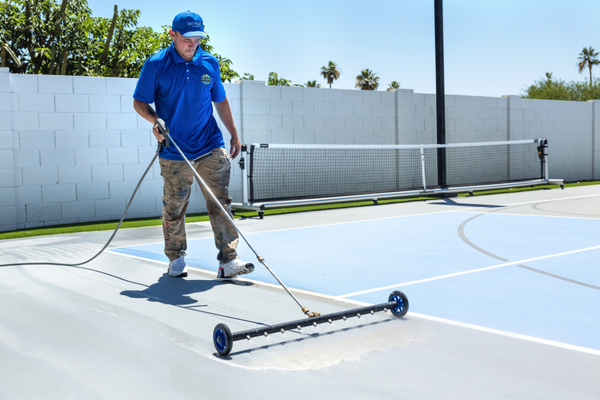
An honest ROI conversation requires an honest look at ongoing costs.
A professionally built court with proper maintenance requires surface recoating every seven to ten years in Arizona's climate, at a cost of roughly $7,000 to $10,000 for a full resurfacing. Annual maintenance, cleaning, inspection, and minor touch-ups run a few hundred dollars per year on a well-built court.
Courts that weren't built to the right standard require more frequent and more expensive intervention. A slab that wasn't engineered for Arizona's thermal expansion develops cracking issues that compound over time. A coating applied to a poorly prepared surface fails prematurely. The maintenance cost difference between a properly built court and a poorly built one over a ten-year period can easily exceed the original price difference between the two builds.
This is why the foundation decision is the most important financial decision in the entire process. The surface is a maintenance item. The slab is a permanent one.
What the Numbers Actually Say
For a $45,000 court in a luxury Scottsdale property:
Property value impact: Conservative estimates from local real estate professionals suggest a well-built court adds $30,000 to $60,000 in perceived value at the high end of the market, recovering a significant portion of the build cost at the point of sale.
Short-term rental impact: A $75 to $150 nightly rate increase at 65 percent occupancy generates $17,000 to $35,000 in additional annual revenue, a full court payback in two to three years for an active rental property.
Lifestyle impact: Immeasurable, but consistent across every court owner conversation we've had.
Is It Worth It?
For the right buyer in the right property, yes. Unambiguously.
A homeowner in a luxury Scottsdale neighborhood who plans to stay in the property for five or more years, who values the lifestyle the court delivers, and who builds to the right standard is making a financially sound decision that also happens to improve their daily life in ways most investments don't.
A short-term rental host with a property in a high-demand market is looking at one of the strongest amenity ROI opportunities available in 2026.
The cases where it doesn't pencil are the cases where the buyer is looking for a pure financial return on a property they plan to sell quickly, or where the build quality doesn't match the investment; a cheap build in a high-end neighborhood rarely recovers its cost the way a properly built court does.
Build it right. Build it for the life you're actually living. And let the financial return take care of itself.
At Just Pickle Courts, we build courts across Scottsdale and the greater Phoenix area that hold their value, perform year after year, and become the part of the property owners love most. If you're ready to run the numbers on your specific property, schedule a free on-site consultation and let's talk about what a court could do for yours.
Contact a Court Planning Specialist to get a custom, no-obligation quote.
Interested in more pickleball content? Follow us on Instagram.