



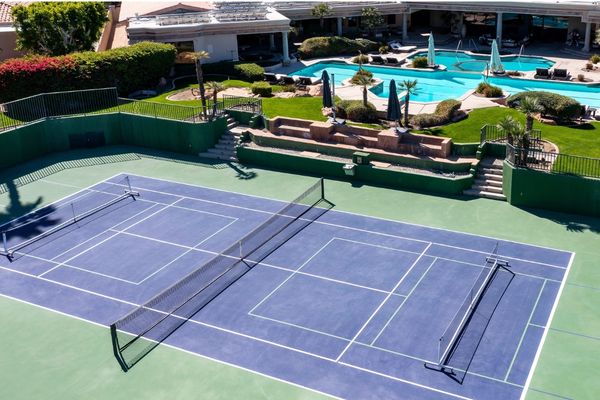
How to Convert a Tennis Court to a Pickleball Court
If you’re wondering how to convert a tennis court to a pickleball court, you’re not alone. Across the country, property owners, HOAs, clubs, and municipalities are rethinking how their courts are used, and pickleball is leading the charge.
Pickleball’s smaller court size, broader age appeal, and high participation rates make it one of the smartest upgrades you can make to an existing tennis court. The good news is that converting a tennis court to pickleball is often faster, more cost-effective, and more flexible than people expect.
Here’s what you need to know before you start.
Why Convert a Tennis Court to Pickleball?
Tennis courts require more space, fewer players per court, and often sit underused. Pickleball flips that equation.
A single tennis court can typically accommodate:
Up to four pickleball courts
More players at once
Shorter game times
Higher daily usage
This makes pickleball conversions especially attractive for HOAs, country clubs, schools, and community parks, but homeowners with private tennis courts are making the switch, too.
Standard Tennis Court vs Pickleball Court Dimensions
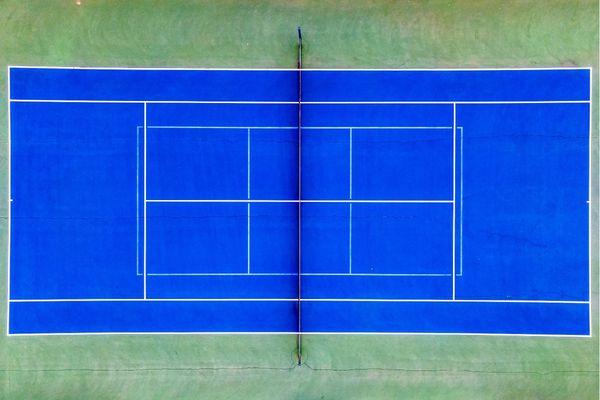
Understanding court dimensions is key to planning a successful conversion.
Tennis court: 36’ x 78’ (playing area)
Pickleball court: 20’ x 44’ (playing area)
Because pickleball courts are significantly smaller, most tennis courts can fit:
2 pickleball courts (side by side)
Or up to 4 pickleball courts with proper spacing
This flexibility is one of the biggest advantages of a tennis-to-pickleball conversion.
Options for Converting a Tennis Court to Pickleball
There’s no one-size-fits-all approach. The right solution depends on how the space will be used.
1. Line Striping Over an Existing Tennis Court
This is the most budget-friendly option.
Pickleball lines are added to the existing tennis surface
Tennis lines remain
Best for shared-use facilities
Pros: Quick, affordable
Cons: Can feel visually busy if not done thoughtfully
2. Dedicated Pickleball Court Conversion
This option removes or minimizes tennis use.
Tennis lines are removed or faded out
New pickleball layout is designed intentionally
Often includes updated colors or resurfacing
Pros: Cleaner look, better play experience
Cons: Higher upfront cost
3. Full Resurface + Pickleball Redesign
For aging or cracked courts, resurfacing is often the smartest move.
Old surface issues are addressed
Fresh acrylic coating is applied
Pickleball courts are laid out to regulation standards
Pros: Best long-term performance and appearance
Cons: Higher investment, but longest lifespan
Surface Considerations That Matter
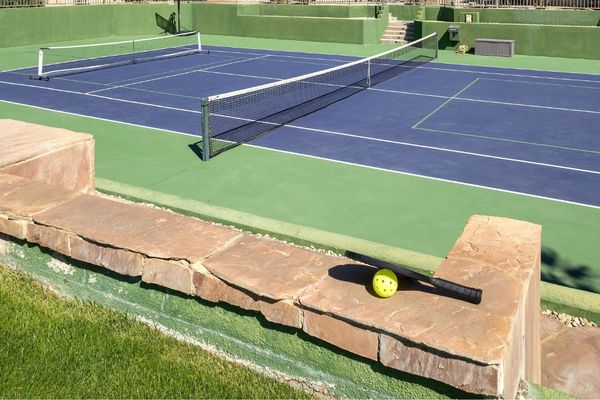
Not all tennis courts are ready for conversion without proper preparation. Before moving forward, professionals evaluate key factors like existing cracks or surface damage, drainage and slope, current coatings, and fence spacing or run-off areas. Addressing these elements first, often through resurfacing, leads to better ball bounce, improved player safety, and a finished court that performs well and lasts longer.
Is It Worth Converting a Tennis Court to Pickleball?
For most properties, the answer is yes.
Pickleball courts:
Attract more daily users
Support leagues, lessons, and social play
Create higher engagement with less space
Appeal to a wider age range than tennis
That’s why pickleball conversions are one of the fastest-growing recreation upgrades nationwide.
How to Know What Will Work on Your Court
Every tennis court is different, which means there’s no one-size-fits-all conversion plan. The best way to determine how many pickleball courts will fit, whether resurfacing is needed, what layout will play best, and what the total investment looks like is to have a Court Planning Specialist evaluate your space. A thoughtful conversion ensures your court plays well, looks intentional, and lasts.
Ready to Learn What Can be Accomplished on Your Property?
Our Court Planning Specialists can walk you through design options tailored to your home, club, or community.
Contact to schedule a complimentary, no-obligation consultation today.
Interested in more pickleball content? Follow us on Instagram.