


Does Court Color Affect Pickleball Play? Pros & Cons
When designing a new pickleball court, most people focus on dimensions, surfacing, and fencing. But there's another decision that can have a surprisingly big impact on the playing experience: court color.
The color of your pickleball court surface doesn't just affect appearance—it can influence ball visibility, heat retention, player comfort, and even long-term maintenance. Whether you're building a backyard pickleball court or a commercial facility, choosing the right colors can improve both performance and aesthetics.
Here's what to consider before selecting your court colors.
Bright Court Colors
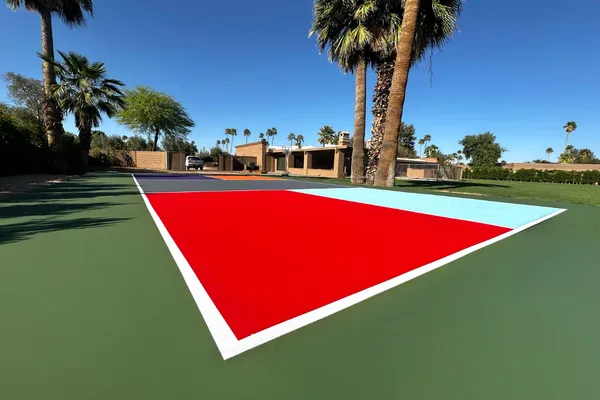
Bright blues, greens, and reds have become popular choices for modern pickleball courts. These vibrant surfaces create a bold, professional appearance and often make facilities stand out.
Pros
Excellent visual appeal.
Easy to distinguish playing areas.
Great for clubs, parks, and tournament-style courts.
Can increase curb appeal for residential courts.
Cons
Some bright colors may show dirt, dust, or scuff marks more easily.
Extremely vivid colors can fade faster if lower-quality coatings are used.
Dark Court Colors
Dark greens, charcoal grays, and deep blues provide a more traditional look while offering practical benefits.
Pros
Hides dirt, leaves, and everyday wear.
Creates a clean appearance between maintenance cycles.
Offers a classic, understated aesthetic.
Cons
Darker surfaces absorb more sunlight, making the court noticeably hotter during the summer months.
Increased surface temperatures may reduce player comfort in warmer climates.
Light Court Colors
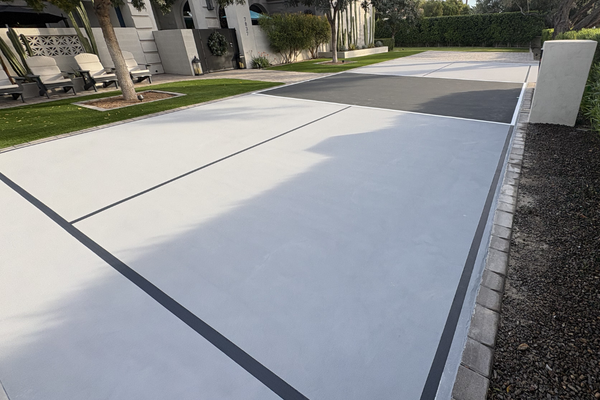
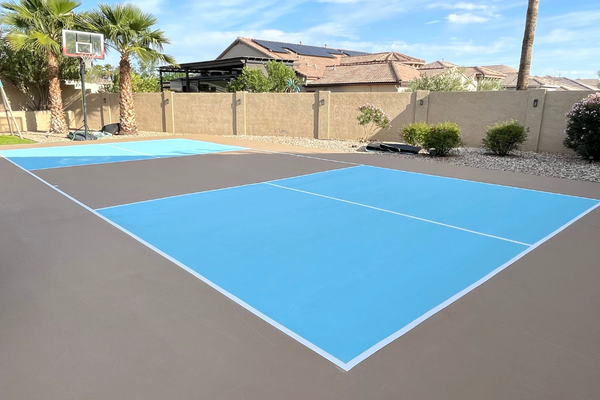
Light gray, tan, and softer blue tones have grown in popularity, especially for residential installations.
Pros
Reflect more sunlight, helping keep the court cooler.
Can create a brighter playing environment.
Often pair well with modern home designs.
Cons
Light-colored courts tend to show stains, debris, and tire marks more easily.
Ball visibility may decrease if there's not enough contrast between the court and the ball color.
Ball Visibility Matters
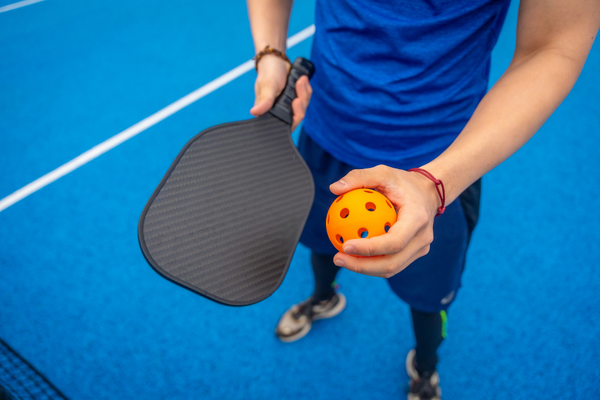
One of the most important considerations when choosing pickleball court colors is contrast.
The yellow pickleball should stand out clearly against the playing surface. Medium-to-dark blues and greens often provide excellent visibility, which is one reason they're commonly used on professional courts.
Using contrasting colors between the playing area and the out-of-bounds zone can also help players judge lines more accurately during fast-paced rallies.
Think About Your Climate
If you live in a hot climate, lighter court colors may help reduce surface temperatures and improve player comfort during midday games.
In cooler regions, darker colors may not present as much of a disadvantage and can provide a timeless appearance with less noticeable dirt buildup.
Appearance vs. Performance
The best court color balances aesthetics with functionality. While it's tempting to choose a color based solely on appearance, factors like heat, maintenance, and visibility will affect how much you enjoy your court for years to come.
At Just Pickle Courts, we help homeowners, HOAs, schools, and commercial facilities choose color combinations that not only look great but also perform well for their specific location and playing needs.
There isn't a single "best" color for every pickleball court. The right choice depends on your climate, maintenance preferences, surrounding landscape, and how you plan to use the court.
If you're planning a pickleball court installation, working with an experienced pickleball court builder can help you select colors that maximize both performance and longevity while creating a court you'll love to play on.
Contact a Court Planning Specialist to get a custom, no-obligation quote.
Interested in more pickleball content? Follow us on Instagram.