


What Every Multi-Court Facility Should Include (But Often Doesn't)
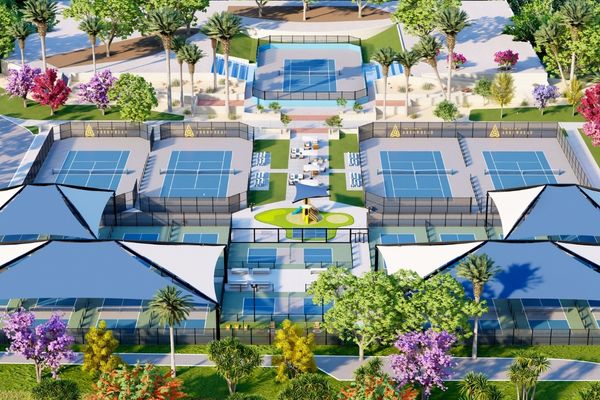
When designing a multi-court facility, whether for a health club, community center, HOA, or dedicated pickleball venue, there are a lot of things to consider.
Most facility owners focus on the obvious: how many courts fit the space, what surface to use, and how to light the area. Those decisions matter, but the gaps that frustrate players, strain staff, and limit a venue's potential almost always show up in the details that didn't make the initial planning checklist.
Here's what separates a well-designed multi-court facility from one that gets the basics right but misses the bigger picture.
Adequate Spacing Between Courts
This creates problems that can't be fixed without tearing things apart.
The minimum recommended buffer between adjacent courts is 10 feet. Many facilities squeeze courts closer together to maximize the number of courts on a given footprint, and the result is players constantly interfering with each other's games, balls rolling across active courts mid-point, and safety incidents that are entirely preventable.
The IFP (International Federation of Pickleball) recommends a minimum playing area of 30 x 60 feet per court, which includes clearance out-of-bounds. For multi-court layouts, the shared space between courts should be treated as a non-negotiable buffer, not a place to recover a few extra feet.
Of course, this is just a suggestion, but when you're at the facilities that prioritize spacing you can feel the difference. It's open, safe, and professional.
Divider Netting Between Courts
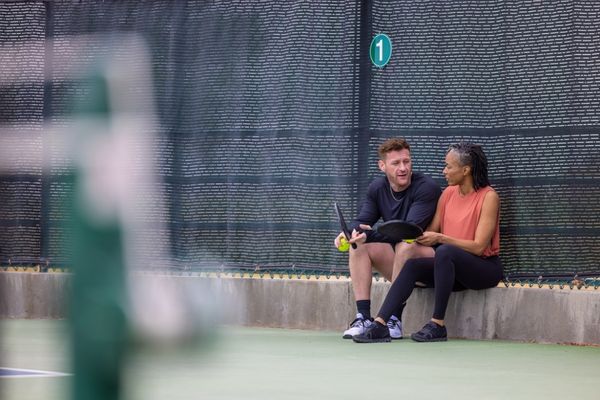
If you don't have the space for the recommended court separation at your facility, there are other options, such as divider netting. Even if you do have the suggested court separation, divider netting can be a great benefit.
Without netting between courts, stray balls become a constant interruption. A mis-hit during one game rolls across an adjacent court mid-rally, stopping play, creating tripping hazards, and frustrating everyone involved. At busy facilities with multiple courts running simultaneously, this happens dozens of times per session.
Retractable divider netting is the standard solution. It keeps balls contained to their court, reduces disputes between groups, and allows courts to be combined into a larger space when the facility hosts clinics, events, or beginner lessons that need more room.
It's a relatively modest addition to a facility budget, and it's one of the first things experienced players notice and appreciate when they walk into a well-run venue.
A Dedicated Warm-Up and Practice Wall
Most multi-court facilities offer courts for open play, leagues, and lessons. Only a few of them include a dedicated practice wall.
This is a missed opportunity. A rebounder or practice wall gives players a place to work on mechanics without tying up a full court, extend their warm-up before a match, or keep drilling after a session ends, and the next group is waiting. It takes up minimal space and gets used consistently by serious players who want more time with a paddle in their hand than scheduled court time allows.
For facilities trying to build a loyal base of competitive or improvement-minded players, a practice wall signals that the venue understands what serious players actually need.
Proper Spectator Areas
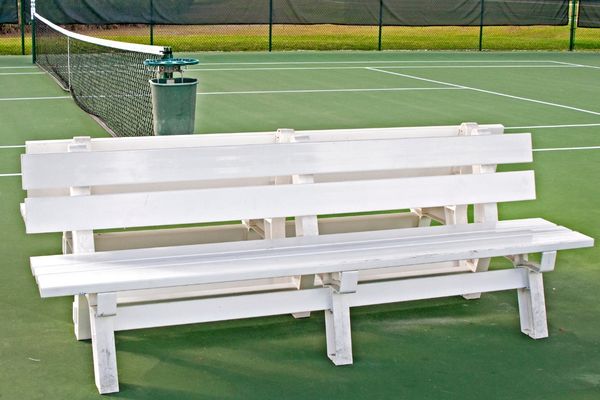
Pickleball is a social sport. People come to watch as much as they come to play, especially during league nights, tournaments, and club events.
A well-designed facility includes a defined spectator zone with clear views of multiple courts, adequate seating for the expected crowd, and enough separation from the playing surface to keep spectators safe and out of players' way.
For facilities that host tournaments or want to build event revenue, this becomes even more important. A tournament that can't comfortably accommodate spectators is a tournament that won't be invited back, and one that doesn't photograph or film well for the promotional content that drives future registrations.
Shade Structures and Weather Protection
In Arizona, this isn't optional. It's essential.
The investment in shade structures, whether permanent pergolas, shade sails, or covered pavilion designs, pays back directly in usable court hours and facility revenue.
Beyond shade, weather protection for equipment storage areas, seating zones, and entry points matters too. A facility that forces players to drag bags and gear through unprotected areas in summer heat or during monsoon season creates friction that compounds over time.
The best outdoor facilities in the Southwest are designed around the climate, not despite it.
Sufficient Lighting for Evening Play
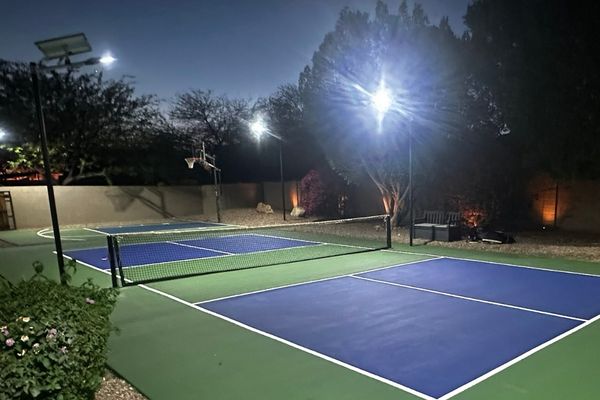
Evening hours are some of the most in-demand slots at any pickleball facility, particularly in warm climates where players actively avoid peak afternoon heat.
Professional-grade LED lighting with proper pole placement, fixture aiming, and photometric planning creates an evening playing environment that's genuinely comfortable and competitive. It also dramatically extends the facility's usable hours, which is the single most direct path to increasing court revenue without adding more courts.
Accessible Restrooms and Water Stations
For serious players, the availability of clean, accessible restrooms is a baseline expectation, not a bonus. For tournaments and events, it becomes a logistical requirement. Portable options can work for temporary or early-phase facilities, but permanent installations signal that a venue is built for the long term.
Water stations or hydration points near the courts are equally important, especially in Arizona's climate. Players shouldn't have to walk to a distant building or parking lot to refill a water bottle between matches.
Clear Court Numbering and Wayfinding
Numbered courts, clearly visible from multiple angles, make check-in smoother, reduce disputes over court assignments, and help staff manage the facility more efficiently. Signage at entry points, along pathways, and at each court end should be part of the initial design, not something retrofitted after the first tournament creates confusion.
This extends to parking, entry, and equipment storage as well. A facility that's easy to navigate from arrival to court to departure creates a professional impression before a single ball is hit.
Storage for Equipment and Personal Belongings
Players arrive with bags, paddles, water bottles, extra balls, and personal items. Without a designated place to put them, those items end up on the ground, along fence lines, and in the paths of other players, which is both cluttered and hazardous.
Benches with storage hooks or cubbies near each court are a low-cost solution that makes a noticeable difference in how organized and player-friendly a facility feels. For larger facilities, a dedicated equipment room or lockable storage area allows clubs to store portable nets, ball hoppers, teaching aids, and event supplies without turning a corner of the court area into a storage pile.
A Sound Surface for the Long Term
Asphalt and concrete bases with acrylic sport coatings are the standard court surface for good reason; they're durable, consistent, and able to be resurfaced when the coating wears. But not all installations are created equal. A base that wasn't properly graded drains poorly and develops cracking issues. A coating applied to a surface that wasn't adequately cured or prepared won't bond correctly and will peel prematurely.
For multi-court facilities, the surface investment is multiplied across every court. Choosing a builder with documented experience in multi-court construction and checking their previous work is one of the highest-leverage decisions a facility owner can make.
A Plan for Growth
The facilities that serve their communities best over time are the ones that were designed with expansion in mind from the beginning.
That means ensuring the electrical infrastructure can support additional lighting circuits if courts are added. It means leaving space in the site plan for future courts rather than filling every square foot upfront. It means installing conduit runs during initial construction that would be far more expensive to add later.
Pickleball's growth trajectory in the US shows no signs of slowing, and facilities that are positioned to expand will be the ones that meet demand rather than scramble to keep up with it.
A great multi-court facility is more than a collection of courts with good lines and a fence around them. It's a thoughtfully designed environment where players want to spend time, staff can operate efficiently, and events can run without friction.
The details that make that possible, spacing, netting, shade, lighting, storage, surfaces, and the foresight to plan for growth, are exactly what distinguish a facility built to last from one that gets by.
At Just Pickle Courts, we design and build multi-court facilities across Scottsdale and the greater Phoenix area, from initial site planning through final installation. If you're planning a facility and want to get it right from the start, we'd love to be part of the conversation.
Contact us to schedule a complimentary, no-obligation consultation today.
Interested in more pickleball content? Follow us on Instagram.