


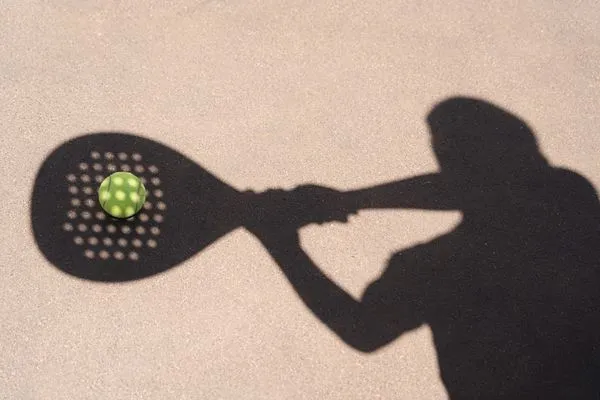
Is Padel Coming for Pickleball's Throne?
We build pickleball courts. That's what we do, that's what we love, and that's what we think is one of the best investments you can make in a backyard or a facility.
So when padel started showing up in every conversation about racket sports, we paid attention. Not defensively, curiously. Because if you're serious about court sports, padel deserves some consideration. And if you're trying to decide between the two, we have a real answer from people (us) who actually know courts.
Here it is.
Pickleball and Padel Are Not the Same Sport
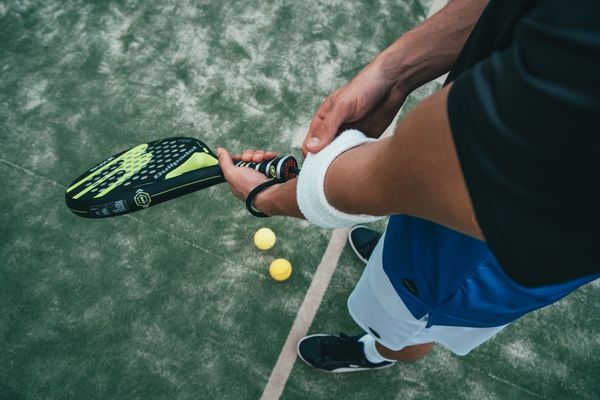
Like at all. It might sound silly to even say, but it’s worth clearing up because a lot of people assume they are, or at the very least assume they are close cousins.
Both are played with a paddle, are social, doubles-friendly, and easier to pick up than tennis. Both reward placement and positioning over raw power. And both have communities of genuinely passionate players who will talk your ear off about why their sport is the best (guilty 😅).
But step onto a padel court, then a pickleball court, and the difference becomes obvious.
Pickleball is played on the court. Padel is played on the court and with the court. That one sentence explains most of what you need to know, but we’ll also get granular.
What Actually Makes Them Different
Court size: Pickleball runs 20 x 44 feet. Padel runs roughly 33 x 66 feet.
Walls: Pickleball has none. Padel's glass and mesh enclosure is part of the game.
Ball: Pickleball uses a plastic perforated ball. Padel uses a low-compression tennis ball.
Format: Both are great for doubles. Pickleball also works for singles. Padel is almost always doubles.
Footprint: Pickleball fits most backyards. Padel needs dedicated space and a specialized enclosure.
The walls are the biggest differentiator. In padel, the glass and mesh enclosure isn't just there to keep the ball contained. It's a playing surface. Players use the walls to return shots, create unexpected angles, and keep rallies alive in ways that simply don't exist in pickleball.
In pickleball, when the ball goes out, it's out. The strategy lives entirely within the court, the kitchen line, the soft game, the reset, the speed-up. It's a different kind of chess match.
Neither is better. They're just different games.
The Pickleball Case
We're biased, and we'll own it.
Here's why we think pickleball wins for most people:
It fits more spaces. A standard pickleball court is 20 x 44 feet. You can fit four pickleball courts on a single tennis court. For residential builds, HOA amenity spaces, and health clubs with limited square footage, pickleball is simply more buildable.
It's more multi-generational. The smaller court, slower ball, and lower physical demand make pickleball genuinely accessible across a wider age range. A ten-year-old and a seventy-year-old can play a competitive, enjoyable game together. That's rare in any sport.
The community is already here. In the Scottsdale and Phoenix area, pickleball infrastructure- courts, leagues, events, open play- is deep and growing. Padel is building momentum, but the community is still early-stage by comparison.
The backyard case is stronger. A pickleball court is a manageable addition to most residential properties. A padel court requires a specialized enclosure, a larger footprint, and a more significant structural investment.
The Padel Case
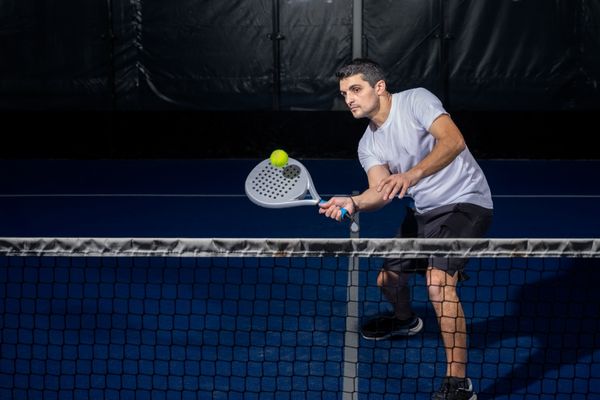
If pickleball is a strategic chess match, padel is chess with a few extra pieces nobody told you about.
The walls add a dimension that takes the game somewhere genuinely new. Rebounds, unexpected angles, and shots that come back off the glass at a completely different trajectory padel rewards players who think ahead and move well, and it has a learning curve that keeps serious players engaged for a long time.
Padel is also growing globally in a way that pickleball hasn't fully matched outside North America. In Europe and Latin America, padel courts are everywhere. If you travel frequently or have international clients or guests, padel carries a certain currency that pickleball doesn't quite have yet in those markets.
And padel courts are genuinely striking to look at. The glass enclosure, the visual of a rally happening inside that structure- it's a different aesthetic that some property owners find compelling.
Why Not Both?
For most homeowners, most HOAs, and most facilities in the Scottsdale and Phoenix area, pickleball is the right call right now. The community is here, the court footprint is manageable, and the multi-generational appeal is hard to beat.
But if you have the space and the appetite for something that pushes the experience further (a larger property, a resort, a facility looking to differentiate), adding a padel court alongside pickleball courts creates something genuinely compelling. Two distinct experiences, two communities served, one property that becomes a destination for serious court sports players.
The question was never really pickleball or padel.
It's what kind of experience do you want your court to create, and for whom.
So Is Padel Coming for Pickleball's Throne?
Not anytime soon. At least not here.
Pickleball has too deep a head start in the US market, too strong a community, and too practical a footprint to be displaced quickly. But padel is real; it's growing, and dismissing it would be a mistake.
The smarter move is to understand both, and build for the experience you actually want.
At Just Pickle Courts, we specialize in pickleball court builds across Scottsdale and the greater Phoenix area. If you're thinking about building a court and want to talk through what makes sense for your property, schedule a free on-site consultation, and let's figure it out together.
Contact a Court Planning Specialist to get a custom, no-obligation quote.
Interested in more pickleball content? Follow us on Instagram.