


How to Choose Court Colors That Stay Cool and Look Great Year-Round
When most people start designing a pickleball court, they focus on layout, fencing, or surface materials. Color tends to come later in the process, almost like a finishing touch.
But in reality, color is one of the most important decisions you’ll make.
It doesn’t just shape how your court looks. It affects how hot the surface gets, how well the game plays, and how your court holds up over time. A court that looks great on day one but becomes too hot to use or quickly shows wear is not a smart investment.
The goal is to choose colors that perform just as well as they present.
The Hidden Impact of Color on Performance
Court color plays a quiet but powerful role in how the space functions day to day. It influences surface temperature, visibility, and long-term maintenance in ways that are easy to overlook until it’s too late.
Darker tones naturally absorb more heat. On a sunny day, that can make a noticeable difference underfoot, especially in peak summer months. Lighter tones reflect sunlight instead of absorbing it, which helps keep the playing surface more comfortable and extends the usable hours of the court.
At the same time, color directly affects how players experience the game. If there’s not enough contrast between the playing surface, the lines, and the surrounding area, it becomes harder to track the ball. That subtle strain adds up quickly, especially during longer matches.
Then there’s the long-term factor. Some colors fade faster. Others show dirt, debris, or wear more easily. What looks clean and vibrant at installation can start to feel tired if the wrong palette is chosen.
All of this is why color should be approached as a performance decision first, and a design decision second.
Keeping Your Court Cooler Without Sacrificing Style
Heat is one of the biggest complaints court owners have after installation, and it almost always traces back to color choices.
Deep blues, blacks, and darker greens can create a bold, high-contrast look, but they also tend to absorb and hold heat. In full sun, that can make the surface uncomfortable and limit play during the hottest parts of the day.
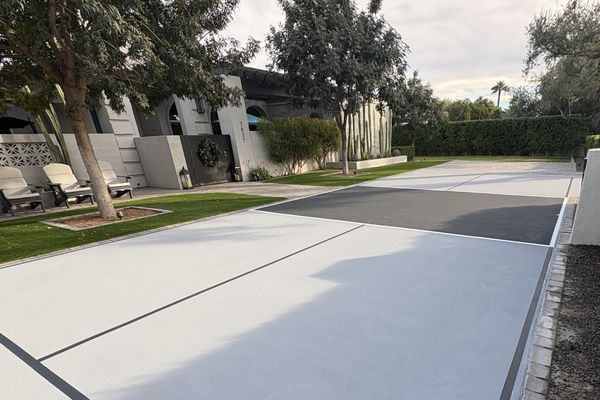
Lighter tones offer a clear advantage here. Soft blues, muted greens, and even subtle gray palettes reflect more sunlight and stay noticeably cooler. The difference is not just theoretical. It is something players feel immediately.
That said, you do not have to choose between function and design.
A well-designed court often uses contrast strategically. The main playing area can stay lighter to reduce heat, while the outer zones use slightly darker tones to create visual definition. This approach gives you the best of both worlds. The court remains comfortable where it matters most while still delivering a clean, structured look.
Designing for Visibility and Playability
A court can be visually striking and still fall short if it is not easy to play on. The most successful designs prioritize clarity.
Contrast is what makes a court feel intuitive. Players should be able to track the ball effortlessly, recognize boundaries without hesitation, and move confidently without second-guessing what they see.
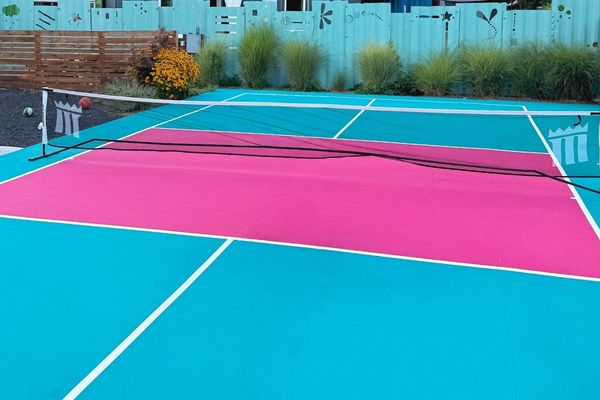
This is why many of the most effective courts rely on proven color pairings rather than chasing trends. A lighter interior paired with a darker perimeter is one of the most reliable combinations. It creates natural separation without overwhelming the eye.
White lines remain the standard for a reason. They offer the highest level of visibility across nearly every color combination and hold up well over time. While it can be tempting to experiment with line color for a custom look, it often comes at the expense of playability.
Good design in this case is not about being different. It is about being clear.
Choosing Colors That Age Well
Your court will live outdoors. It will face sun exposure, weather changes, and consistent use. The way your colors respond to those conditions matters just as much as how they look on day one.
Darker colors tend to hide dirt and surface imperfections better, which can help the court look cleaner between maintenance cycles. However, they are more prone to visible fading over time, especially in areas with strong sun exposure.
Lighter colors hold their tone longer but can show debris and wear more easily. Without regular cleaning, they may start to look worn even if the surface itself is still in good condition.
This is where mid-tone, slightly muted colors tend to stand out. They strike a balance between the two extremes, offering a clean appearance while minimizing the visual impact of both fading and debris. They are often the safest choice for clients who want their court to look consistent year after year without constant upkeep.
Designing a Court That Fits Its Surroundings
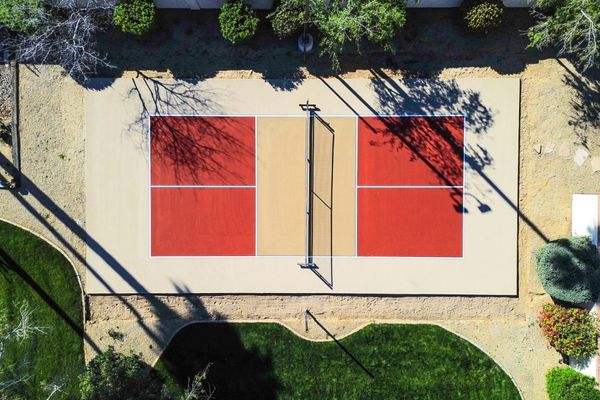
A great court does not feel separate from its environment. It feels integrated.
For residential projects, this often means leaning into colors that complement the home and the surrounding landscape. Soft greens, natural blues, and neutral tones tend to blend well without overpowering the space. The court becomes an extension of the property rather than a visual interruption.
In club or community settings, there is more flexibility to introduce bolder contrasts or even subtle branding elements. Even then, the most effective designs still prioritize balance. The court should feel intentional, not loud.
Taking a step back and considering the full setting, not just the surface itself, is what elevates a good design into a great one.
The Role of Surface Coatings
Color alone does not determine performance. The coating system behind it plays an equally important role.
High-quality acrylic coatings designed for sports surfaces can help regulate heat, improve durability, and preserve color over time. They add consistency to how the court feels and how it wears, which ultimately protects your investment.
This is where experience matters. The right combination of color and coating is what ensures your court performs well, not just in the first season, but for years to come.
Choosing court colors is not just about picking what looks good in a sample or on a screen. It is about understanding how those colors will perform in real conditions, day after day, season after season.
The best courts are the ones that feel just as good as they look. They stay comfortable in the heat, remain easy to play on, and continue to present well over time.
When you approach color with that level of intention, you end up with more than a beautiful court. You end up with one that truly works.
We'd love to help you bring the court home. Contact us to schedule a complimentary, no-obligation consultation today.
Interested in more pickleball content? Follow us on Instagram.