


The Complete Guide to Pickleball Court Maintenance
A well-kept court isn't just functional. It's an experience. Here's how to protect your investment, your players, and the game itself.
There's a particular kind of satisfaction that comes from stepping onto a flawlessly maintained pickleball court. The surface is clean, the lines are crisp, the net hangs at exactly the right tension. Before a single ball is struck, the court communicates something: this place is cared for.
Whether you're managing a private court at home or overseeing a multi-court facility, maintenance is the quiet foundation beneath every great game. Neglect it, and you'll notice it in surface cracks that become trip hazards, in faded lines that cause disputes, in net posts that wobble when they shouldn't. Invest in it, and your court becomes a place players return to not just for the game but for the feeling.
This guide walks you through exactly what to do and when, daily, weekly, and with the seasons, so that your court stays in peak condition year-round.
Why Court Maintenance Is About More Than Upkeep
Before we get into cadence and checklists, it's worth reframing what maintenance actually means.
A pickleball court is a surface that absorbs impact, weather, UV exposure, moisture, and thousands of hours of lateral movement. Every scuff, puddle, and temperature swing is asking something of that surface. Regular maintenance isn't about chasing perfection. It's about responding to those demands before they cause damage.
For homeowners, consistent care protects what is often a significant investment. For facility managers, it also protects players from injury, reduces long-term resurfacing costs, and upholds your facility's reputation. A court that looks and plays beautifully is a marketing asset. One that's cracked, faded, or poorly kept sends the opposite message.
Daily Maintenance: The Readiness Habit
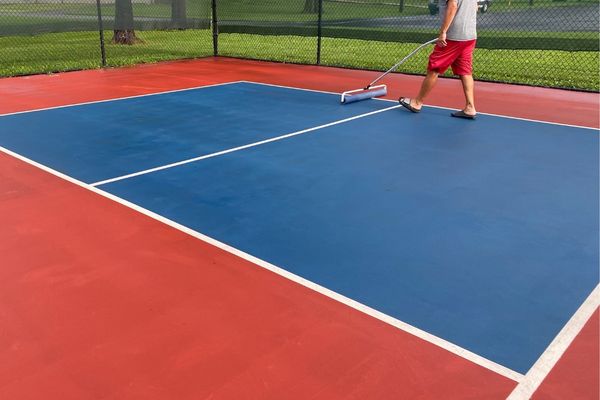
Daily care doesn't need to be time-consuming. Think of it as a brief walkthrough, a few minutes each morning or evening to reset the court for the next session.
Surface Inspection and Debris Removal
Before play begins, walk the court with fresh eyes. Look for anything that shouldn't be there: leaves, gravel tracked in from adjacent paths, standing water from overnight dew or rain, or any debris that could cause a slip or affect ball bounce.
A soft-bristle push broom or a specialized court blower works best for clearing leaves and fine debris without scratching the surface coating. Avoid metal-bristle brooms or anything abrasive. The acrylic coating on most pickleball courts is durable but not immune to surface wear over time.
What to look for daily:
Debris accumulation, particularly near net posts and court edges
Puddles or damp patches that signal drainage issues
Obvious cracks, chips, or surface irregularities
Net tension and post stability
Net Check
A sagging or overtightened net is one of the most commonly overlooked issues on a busy court. The official pickleball net height is 36 inches at the sidelines and 34 inches at the center. A quick check with a tape measure takes seconds and eliminates one of the most common sources of player frustration.
Inspect the net fabric itself for fraying, tears, or fading. If you're in a high-UV environment, nets degrade faster than you might expect. Check that the net posts are secure. Any wobble should be addressed promptly.
After-Play Walkthrough
If your court sees multiple sessions a day, a brief reset between them goes a long way. Wipe down any visible scuff marks with a damp cloth while they're fresh. Store any portable equipment, ball hoppers, paddles, and cones left behind. A tidy court at the end of the day is easier to maintain than one that accumulates neglect.
Weekly Maintenance: Going Deeper
Once a week, your court deserves more focused attention. This is when you move beyond surface tidiness into the health of the playing surface itself.
Deep Cleaning the Surface
A thorough weekly clean removes the fine grit, pollen, algae spores, and oxidized surface material that daily sweeping leaves behind. Use a garden hose or pressure washer on a low setting. High-pressure washing can compromise the acrylic surface coating over time. For most courts, a gentle rinse followed by a light scrub with a soft-bristle brush and a pH-neutral court cleaner is ideal.
Pay particular attention to shaded areas and corners where moisture lingers, and algae or moss can begin to establish. Catching biological growth early is far easier than treating an established patch.
Allow the court to fully dry before play resumes. Wet acrylic surfaces become surprisingly slippery, a risk that's entirely avoidable.
Line Inspection
Lines are the language of the game. Faded or chipped line paint doesn't just look unkind. It creates ambiguity during play and, over time, undermines the court's overall aesthetic. Weekly inspection should note any peeling, chipping, or significant fading so you can schedule touch-up painting before the issue worsens.
For courts in high-traffic environments, line wear is inevitable and expected. Keeping a court-compatible line paint on hand for minor touch-ups is a simple practice that maintains both function and appearance.
Hardware and Accessories
Once a week, take a moment to inspect every piece of hardware on the court:
Net posts: Check for rust, corrosion, or movement in the anchors
Net cable or cord: Look for fraying or tension inconsistencies
Surface coating: Note any new cracks, bubbling, or delamination
Fencing and surrounding structures: Loose panels or sagging gates affect both security and aesthetics
These checks take very little time but create an early warning system that saves significant money and prevents small issues from becoming structural problems.
Seasonal Maintenance: Thinking in Cycles
The seasons ask very different things of your court. A maintenance approach that ignores seasonal shifts will always be playing catch-up. Here's how to think about each season with intention.
Spring: The Season of Renewal
Spring is your most important maintenance window of the year. Winter, even a mild one, leaves its mark on court surfaces through freeze-thaw cycles, leaf tannin staining, and biological growth that established itself through the colder months.
Full surface assessment. Walk every square foot of the court looking for new cracks, surface heaving from ground movement, or areas where the coating has lifted. Even hairline cracks warrant attention. Water entering a crack and freezing will expand it significantly.
Crack repair. Small cracks (under 1/8 inch) can often be addressed with a court-specific crack filler before resurfacing. Larger structural cracks may require professional assessment. Addressing cracks in spring, before the playing season intensifies, is always the right move.
Deep clean and algae treatment. A proper spring clean should include an algae and moss treatment for any affected areas. There are court-safe biocidal treatments that will prevent regrowth through the warmer months.
Net replacement or inspection. If your net has spent the winter outdoors, inspect it carefully. UV and moisture degradation accumulate over time. Many facilities replace nets on a two-to-three-year cycle regardless of visible condition.
Resurfacing consideration. If your court surface is showing widespread fading, significant texture loss, or multiple repaired cracks, spring is the time to assess whether resurfacing is due. A properly resurfaced court typically lasts 4 to 8 years, depending on traffic and climate. The investment almost always costs less than ongoing reactive repairs.
Summer: The Season of Performance
Summer is peak play season, which means peak wear. Your summer maintenance focus shifts from repair to protection and performance.
Increase cleaning frequency. Heat accelerates the growth of algae and surface oxidation. In humid climates, especially, what requires weekly attention in cooler months may need attention twice a week in summer.
Monitor surface temperature. Acrylic court surfaces in direct sun can reach temperatures that affect the coating's integrity over time, and that make barefoot or socked play genuinely uncomfortable. If you're in a hot climate, consider the shade and orientation of your court when scheduling play windows and maintenance.
UV protection. If you're due for a surface coating or have recently resurfaced, applying a UV-resistant topcoat in early summer adds years to the life of the color and texture. The saturated greens and blues that make a pickleball court visually striking are the first things UV strips away.
Drainage vigilance. Summer storms can be intense and fast. After heavy rain, check that your court is draining properly. Pooling water that doesn't clear within 30 minutes suggests a drainage issue worth addressing. Persistent water on the surface softens the coating and, over time, causes delamination.
Fall: The Season of Preparation
Fall is a beautiful time to play and an active time to maintain. Falling leaves are the obvious challenge, but they're not the only one.
Increase debris removal. Leaves left on the court for any length of time leave tannin stains that are difficult to remove once set. In wooded or heavily landscaped settings, daily leaf removal in peak autumn may be necessary.
End-of-season deep clean. Before winter arrives, give the court a thorough clean, crack inspection, and hardware check. Addressing any issues in autumn while conditions are still workable is far preferable to discovering them in spring.
Net storage decision. In climates with harsh winters, removing and storing the net is a simple practice that significantly extends its lifespan. Net hardware, posts, anchors, and tensioners should be inspected for corrosion and treated or replaced as needed before winter sets in.
Document the court's condition. Photographs taken in autumn provide a useful baseline for assessing winter damage in spring. This is particularly valuable for facility managers tracking maintenance history or preparing for resurfacing budgets.
Winter: The Season of Patience
In mild climates, winter maintenance is simply a continuation of the cooler-season rhythm, slightly less intensive but consistent. In harsher climates, the approach changes significantly.
In mild climates: Continue weekly cleaning, monitor for moss growth, and keep the court free of wet leaf accumulation. Play can continue with appropriate footwear, and the court benefits from the natural temperature regulation.
In cold climates, the primary goal is to minimize freeze-thaw damage. Ensure drainage is functioning before temperatures drop. Never use salt or chemical de-icers on a pickleball court surface. They are deeply damaging to acrylic coatings and will accelerate deterioration rapidly. For snow removal, use a soft foam squeegee or a plastic snow shovel with a rubber edge, taking care not to drag debris across the surface.
For courts that will see extended periods of non-use, covering high-traffic areas with protective court covers or foam padding at the net post bases can reduce impact from ground movement.
Building a Maintenance Schedule That Works
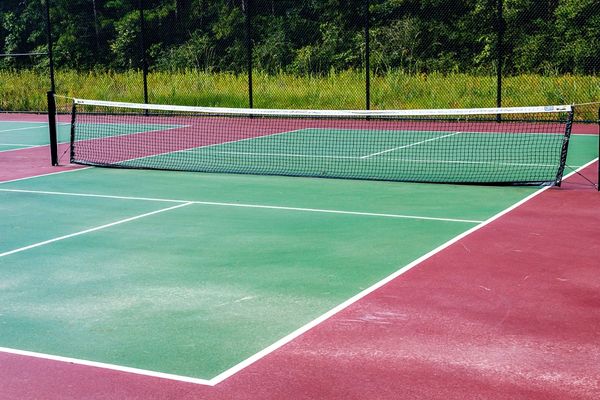
The most effective maintenance program is one that's written down and owned by a specific person or team. A court that depends on everyone's attention typically receives no one's attention.
For homeowners, a simple monthly calendar with daily, weekly, and seasonal tasks marked out is usually sufficient. Fifteen minutes a day and an hour a week will keep most private courts in excellent condition.
For facility managers, a documented maintenance protocol assigned to specific staff, with inspection logs kept on file, protects both the court and the organization. When resurfacing decisions, insurance claims, or quality disputes arise, a maintenance history is invaluable.
When to Call a Professional
Not every maintenance task belongs in the hands of a court owner or facility team. There are moments when professional assessment is the right call, and recognizing them early saves money in the long run.
Call a professional when you notice:
Structural cracking that extends across a significant portion of the court
Surface heaving or subsidence suggesting subbase movement
Delamination affecting more than a small area
Persistent drainage failure despite surface adjustments
Lines or coatings that have deteriorated beyond spot repair
A professional court contractor can assess whether crack repair, resurfacing, or subbase remediation is the appropriate solution and provide a timeline and cost estimate that lets you plan rather than react.
The Philosophy Behind a Cared-For Court
There's something worth saying about why maintenance matters beyond the practical.
A pickleball court that is cared for is a statement about how you value the game and the people who play on it. It says that the experience of being here, the feel of the surface underfoot, the clarity of the lines, the sound of a ball on a well-tensioned net, has been considered and protected.
The best courts aren't just built. They're tended.
At Just Pickle Courts, we design and build courts with longevity in mind, surfaces that reward consistent care and age gracefully with the right attention. If you're looking for guidance on court specifications, resurfacing, or building a new court from the ground up, we'd love to be part of that conversation.
Contact us to schedule a complimentary, no-obligation consultation today.
Interested in more pickleball content? Follow us on Instagram.