



Sound Reduction for Pickleball Courts: Fencing, Barriers & Smart Design
Pickleball is a loud sport. The pop of a paddle on a plastic ball carries farther than most people expect before they build a court, and it's one of the first things neighbors notice when a new court goes in next door.
This isn't a reason not to build. It's a reason to build smart.
Why Pickleball Is Louder Than You'd Expect
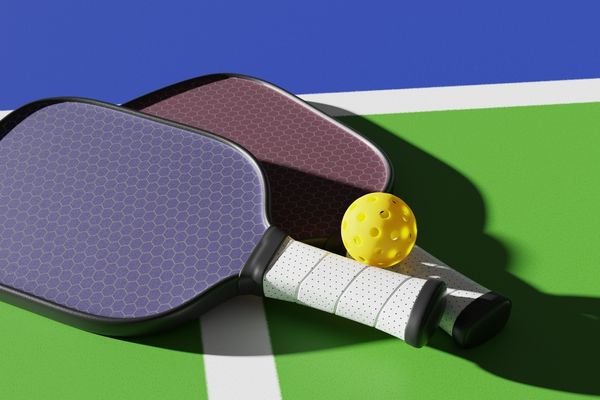
The sound profile of pickleball is different from tennis. A tennis ball on a string racket produces a thud. A pickleball on a solid paddle produces a sharp, high-frequency pop that cuts through ambient noise and travels further, particularly in open residential settings.
The hard court surface amplifies this further. Sound bounces off concrete and acrylic in ways that soft surfaces absorb. Add four players, active rallies, and the natural enthusiasm that comes with a competitive game, and a backyard pickleball court produces a meaningful amount of noise, particularly during early morning or evening sessions when ambient noise levels are low.
Smart Design Starts Before the Build
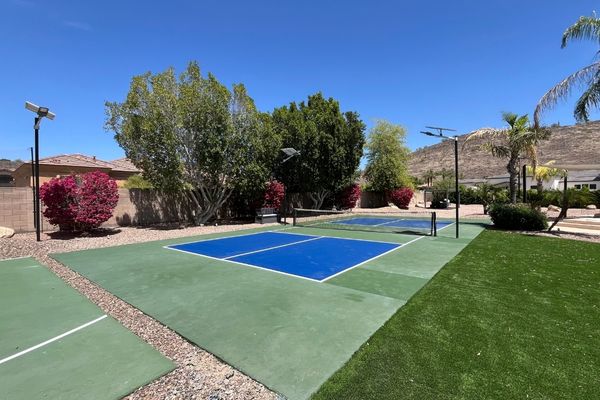
The single most effective sound reduction strategy is court orientation and placement, and it costs nothing if planned before construction begins.
Positioning the court as far from shared property lines as your lot allows, orienting it so the majority of play faces away from neighboring structures, and using existing landscaping or hardscape as natural buffers all reduce noise impact without any additional investment.
These decisions are much easier to make on paper than after the concrete is poured. If sound is a concern, raise it during your planning consultation so court placement can account for it from the start.
Fencing and Windscreens
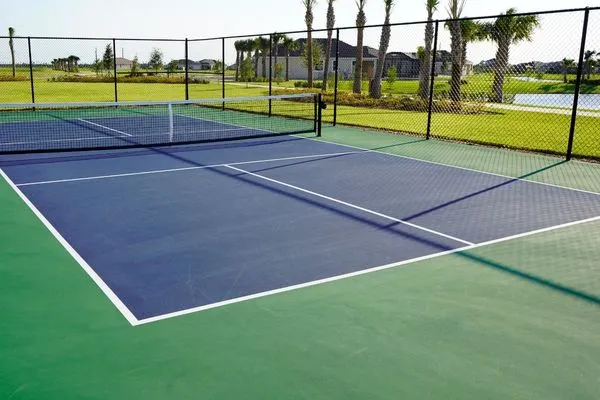
A properly designed fence does more than keep balls on the court. It acts as a partial sound barrier that reduces the direct transmission of noise to neighboring properties.
Solid fence panels, wood, vinyl, or composite, provide more sound reduction than chain link or open mesh. The tradeoff is visibility and airflow, which matters for player comfort in Arizona's climate. A combination of solid lower panels with open mesh or windscreen above is a practical middle ground that provides meaningful noise reduction without turning the court into a closed box.
Windscreen fabric attached to chain-link fencing is one of the most cost-effective sound reduction additions available. It won't eliminate noise, but it meaningfully reduces direct line-of-sight transmission, which carries sound farthest.
Landscaping as a Sound Buffer
Dense plantings along the court perimeter absorb and scatter sound in ways that hard surfaces don't. A row of mature hedgerows, ornamental grasses, or fast-growing privacy trees between the court and a neighboring property line provides both visual and acoustic buffering.
In Arizona, drought-tolerant options like Oleander, Arborvitae, and Texas Privet grow densely enough to provide meaningful sound reduction while requiring relatively little water once established. The taller and denser the planting, the more effective the buffer.
Landscaping is rarely a complete solution on its own, but combined with fencing and smart court placement, it contributes meaningfully to the overall sound profile of the space.
Paddle and Ball Selection
This one is within every player's control regardless of court design.
Quieter paddles, typically those with a softer core material like foam or polymer — produce a noticeably lower-decibel impact than harder core paddles. The difference is audible to anyone standing nearby and meaningful for neighbors who are sensitive to court noise.
Similarly, some ball manufacturers produce lower-noise options specifically designed for residential and noise-sensitive environments. Franklin Sports and others have introduced balls that reduce the signature pop without significantly changing the playing experience.
If neighbor relations are a concern, equipment selection is the easiest immediate adjustment any court owner can make.
The Neighbor Conversation
This is the one no blog can fully solve, but it's worth naming directly.
The most effective way to manage neighbor concerns about court noise is to have the conversation before the court is built rather than after. Letting neighbors know what's coming, inviting them to share any specific concerns, and demonstrating that you've thought about mitigation goes a long way toward building goodwill that makes the occasional loud Saturday morning much easier to navigate.
An invitation to play doesn't hurt either.
Sound reduction for a residential pickleball court is a design problem with real solutions: smart placement, solid fencing, strategic landscaping, and thoughtful equipment choices. None of them eliminate noise entirely, but together they make the difference between a court that creates friction with neighbors and one that everyone on the street eventually wants an invitation to.
At Just Pickle Courts, we think about sound, placement, and the full property context as part of every court design. If you're planning a build and want to get it right from the start, schedule your free on-site consultation and let's talk through the full picture.
Contact a Court Planning Specialist to get a custom, no-obligation quote.
Interested in more pickleball content? Follow us on Instagram.