


Summer Heat Court Care: How to Protect Your Pickleball Court in Extreme Temperatures
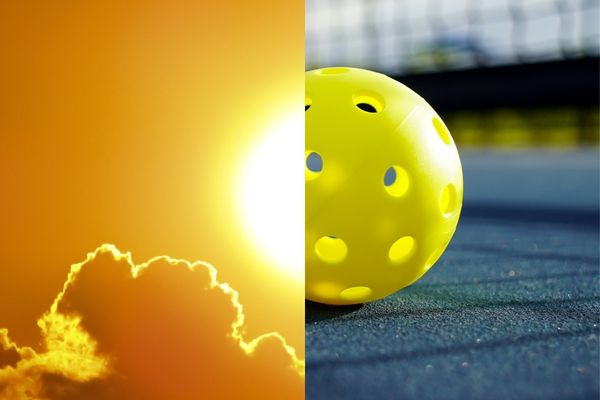
If you own a pickleball court in Scottsdale, Phoenix, or anywhere in the greater Arizona desert, you already know that summer here is not like summer anywhere else. Triple-digit temperatures for weeks at a time, monsoon moisture, and UV exposure that fades everything it touches, your court faces conditions that most court surfaces were never specifically designed for.
The good news is that a properly built and properly maintained pickleball court handles Arizona summers well. The courts that struggle are the ones that weren't built to the right standard or weren't given the basic seasonal attention that extreme heat demands.
Here's what Arizona court owners need to know about protecting their investment through the summer months.
Why Arizona Summer Is Harder on Courts Than Most People Realize

The threat to an outdoor pickleball court in Arizona isn't just heat. It's the combination of factors that summer brings simultaneously.
UV exposure is the primary enemy of acrylic court surfaces. Extended direct sun exposure breaks down the acrylic coating over time, causing fading, surface degradation, and eventually a loss of the texture and grip that makes a court play well. Arizona's sun intensity accelerates this process compared to courts in milder climates.
Thermal expansion and contraction happen every single day in an Arizona court. Surfaces heat up dramatically during the day and cool down at night, causing the concrete slab and the acrylic coating to expand and contract in a continuous cycle. A slab that wasn't engineered for this movement, through post-tension construction or proper joint planning, is more vulnerable to cracking under this repeated stress.
Monsoon moisture adds a layer of complexity that surprises people who only think about heat. Water infiltrating surface cracks, standing on poorly drained courts, and cycling through rapid heat-dry patterns after storms accelerate surface wear and can compromise the bond between the acrylic coating and the concrete beneath it.
Understanding these three forces helps you take the right protective steps rather than guessing at what your court actually needs.
Keep the Surface Clean

The most basic and most overlooked summer court care practice is regular cleaning. During Arizona summers, dust, debris, and organic material accumulate on court surfaces quickly. Left on the surface, this material traps moisture, creates surface abrasion during play, and accelerates UV-related coating breakdown.
A weekly rinse with a garden hose removes the majority of surface debris and takes less than five minutes. For deeper cleaning, a mild soap and water solution applied with a soft-bristle brush removes buildup that a hose alone won't clear.
What to avoid: pressure washing at high settings, harsh chemical cleaners, and abrasive scrubbing tools. These damage the acrylic surface coating and reduce its lifespan. Your court surface is durable, but it responds better to gentle regular maintenance than occasional aggressive cleaning.
Inspect for Cracks Early and Often
Summer is the season when surface cracks are most likely to appear or expand. The daily thermal cycle of heating and cooling puts repeated stress on both the slab and the coating, and small surface imperfections that were stable during cooler months can open up when temperatures climb.
Early detection is everything. A hairline crack addressed immediately is a minor repair. The same crack left through a full Arizona summer, filling with debris, cycling through moisture and heat, becomes a significantly more involved fix by fall.
Walk your court surface monthly during the summer months and look specifically for:
New cracks or existing cracks that have widened
Areas where the acrylic coating appears to be lifting or bubbling
Low spots where water pools after rain or irrigation
Fading or color inconsistency that suggests UV degradation has begun
When you find something worth noting, document it with a photo and contact your court builder. Small issues addressed early stay small.
Protect Against UV Degradation
UV-resistant acrylic coating is the primary defense against sun-related surface breakdown, which is why the quality of the coating system matters so much on Arizona courts. A professional-grade UV-resistant acrylic applied correctly over a properly prepared surface holds up significantly better than a standard coating under sustained UV exposure.
For courts that are already built, there are steps you can take to extend coating life between professional resurfacing cycles.
Avoid leaving equipment, ball hoppers, bags, portable nets, sitting on the court surface for extended periods. These items trap heat against the surface and create concentrated UV exposure patterns that cause uneven fading and localized coating breakdown.
If your court has a shade structure covering part of the surface, be aware that the shaded and unshaded portions of the court age at different rates. The transition zone where shade meets direct sun often shows wear first and is worth monitoring closely.
Manage Irrigation and Drainage
Irrigation systems adjacent to courts are one of the most common sources of preventable summer damage. Sprinkler heads that spray onto the court surface, drip lines routed too close to the court perimeter, and irrigation timing that leaves standing water on or around the court create ongoing moisture exposure that the surface was never designed to handle.
Check your irrigation layout at the start of every summer season and confirm that no active irrigation is reaching the court surface. If your court was built with existing irrigation terminated and capped outside the perimeter, as it should have been — verify that those caps are intact and that any landscaping additions or irrigation modifications since the build haven't introduced new moisture sources near the court.
After monsoon events, check that your court drains completely within a reasonable window. Standing water that persists for more than an hour or two after a storm indicates a drainage issue worth addressing before it compounds throughout the rest of the season.
Be Smart About When You Play

This isn't directly a court maintenance tip, but it affects your court's long-term condition more than most owners realize.
Playing on a court surface that has been sitting in direct Arizona sun for hours means playing on a surface that is significantly hotter than the air temperature — sometimes dramatically so. Beyond the player safety implications, heavy use on an extremely hot surface accelerates the wear patterns in your acrylic coating, particularly in the high-traffic zones around the kitchen line and baseline.
Morning play before the court surface has had time to absorb the day's heat, and evening play after the surface has begun to cool, is better for both the players and the court. In Arizona's summer, before 8 am or after 6 pm isn't just a comfort preference; it's the right call for anyone who wants their court to last.
Schedule a Professional Inspection Before Summer Ends
The end of summer, late September through October, is the ideal time for a professional court inspection in Arizona. Your court has been through the full gauntlet of peak heat, UV exposure, and monsoon season. Any issues that developed during the summer are visible and addressable before the cooler playing season begins.
A professional inspection evaluates surface condition, drainage performance, coating integrity, crack status, and line striping visibility, giving you a complete picture of where your court stands and what, if anything, needs attention before the fall season.
At Just Pickle Courts, our one-year inspection visit is already included and scheduled as part of every build. For court owners outside that window, a seasonal inspection is one of the highest-value maintenance investments you can make in the long-term performance of your court.
An Arizona pickleball court built to the right standard and given basic seasonal attention will perform beautifully through summers that would compromise a lesser build. The courts that struggle are the ones that weren't built for the climate or weren't maintained when small issues had a chance to be addressed inexpensively.
Keep it clean. Watch for cracks. Manage moisture. Play smart. And when in doubt, call your court builder before a small issue becomes a summer project.
At Just Pickle Courts, we build outdoor pickleball courts across Scottsdale and the greater Phoenix area specifically for Arizona's climate, post-tension slabs engineered for thermal expansion, UV-resistant acrylic coating systems, and engineered drainage designed for monsoon season. If your court needs attention or you're ready to build one that handles Arizona summers without complaint, we'd love to help.
Schedule your free on-site consultation, and let's talk about what your court needs.
Contact us to schedule a complimentary, no-obligation consultation today.
Interested in more pickleball content? Follow us on Instagram.