


How Pickleball Courts Increase HOA and Community Amenity Value
Homeowners associations and community developers are making a lot of amenity decisions right now. Pools, fitness centers, walking trails, dog parks, the list of ways to justify dues and attract buyers is long. But one amenity is consistently outperforming expectations in communities across the Scottsdale and Phoenix area, and it's not the one most boards anticipated prioritizing.
Pickleball courts are becoming one of the highest-return amenity investments available to HOAs and community developers, and the reasons go deeper than the sport's popularity.
What Residents Actually Want From Community Amenities
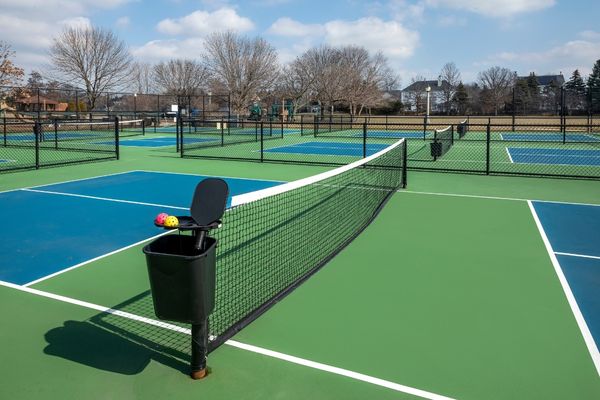
The most valuable amenities share a common trait. They get used consistently by a wide range of residents, not just a narrow demographic subset.
A lap pool serves serious swimmers. A weight room serves fitness enthusiasts. A tennis court sits empty most of the time in most communities because the skill barrier is high and the social format is limiting.
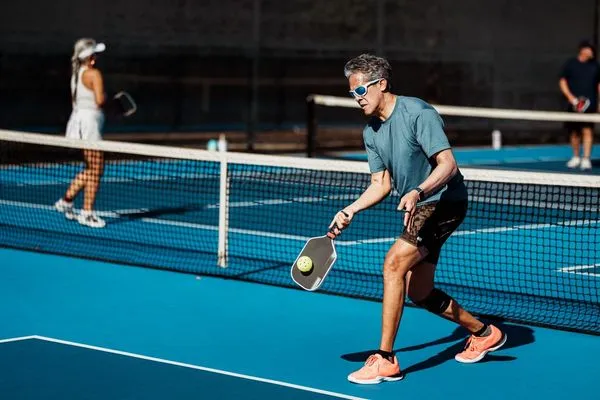
Pickleball changes that equation. The sport is genuinely accessible across age groups, fitness levels, and prior athletic experience. A 65-year-old retiree and a 35-year-old parent can play a competitive, enjoyable game together. That multi-generational appeal is rare in recreational amenities, and it matters directly to HOA boards trying to demonstrate value to a diverse resident population.
The Utilization Argument
Amenity utilization is one of the most honest measures of ROI for an HOA investment. A beautiful amenity that sits unused is a budget line, not a community asset.
Pickleball courts have some of the highest utilization rates of any outdoor recreational amenity in communities that have added them. Courts fill up during morning hours, lunch breaks, and evenings. Leagues form organically. Residents who might never have interacted find themselves playing together regularly.
That consistent utilization has a direct effect on resident satisfaction scores, which in turn affects renewal rates, referrals, and the overall health of the community.
Property Value Impact
The relationship between quality amenities and property values is well established. What's newer is the specific contribution pickleball courts are making to that relationship.
Custom home builders across the Valley are adding pickleball courts as standard features in luxury developments. That's not a marketing decision; it's a market response. Buyers at certain price points expect them, and communities that offer them command attention in a competitive real estate environment.
For existing HOA communities, adding a pickleball court signals that the association is actively investing in the property rather than simply maintaining it. That signal matters to buyers evaluating communities and to current residents deciding whether to stay.
The Social Infrastructure Argument
This one is harder to put a number on, but it might be the most important.
Pickleball requires other people. You can use a gym alone. You can swim alone. You can walk a trail alone. You cannot really play pickleball alone. That dependency creates interaction, and interaction builds community in ways that passive amenities simply don't.
Communities with active pickleball courts report higher levels of neighbor-to-neighbor engagement, stronger resident satisfaction, and a measurable increase in the kind of informal social connection that makes a community feel like one.
For HOA boards and community managers trying to build a place people want to live rather than simply a place people live, that social infrastructure argument is compelling.
What Good Court Planning Looks Like for HOAs
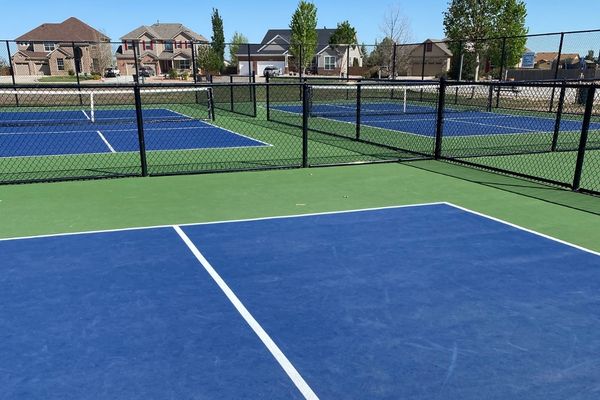
Not all pickleball court installations deliver equal results. A court that's poorly located, inadequately lit, or built to a standard that doesn't hold up under heavy community use creates maintenance headaches and resident complaints rather than the engagement the board was hoping for.
A few things worth getting right from the start:
Location and sight lines. Courts placed where residents can see them from common areas generate more spontaneous use than courts tucked away where nobody knows they're available. Visibility drives utilization.
Lighting for evening play. Evening hours are the most in-demand slots in most communities. Courts without adequate lighting lose those hours entirely, which dramatically limits utilization and return on the investment.
Enough courts for the demand. A single court in a community of several hundred homes creates a bottleneck that frustrates residents faster than having no court at all. Planning for two to four courts, or designing the site for future expansion, is almost always the right call.
Surface quality that holds up under heavy use. Community courts see significantly more traffic than residential courts. A surface specification designed for residential use will fail prematurely under community-level demand. Post-tension slabs and professional-grade coating systems are worth the additional investment in a community setting because the cost of early resurfacing under warranty claims is significantly higher.
Spectator and gathering areas. Courts designed with adjacent seating, shade, and gathering space become social destinations. Courts without those elements get used for play and nothing else, which limits their community-building impact.
The Feasibility Conversation
Many HOA boards and community managers aren't sure whether pickleball courts are realistic for their specific property. The answer depends on available space, budget, existing infrastructure, and the specific resident profile of the community.
A professional court feasibility review is the most efficient way to answer those questions. It evaluates the site, identifies the best configuration for the available space, and provides a realistic picture of what a quality installation would cost and deliver for that specific community.
At Just Pickle Courts, we offer free feasibility reviews for HOAs, builders, and community developers across the Scottsdale and Phoenix area. If your board is exploring options or you want to understand what a court investment would look like for your community, reach out, and let's start the conversation.
Pickleball courts are earning their place at the top of HOA amenity priority lists because they deliver on what amenities are supposed to do. They get used, they bring people together, they signal investment in the community, and they hold their value in a real estate market that has come to expect them.
For HOA boards asking where to put the next amenity dollar, the answer is increasingly clear.
Contact a Court Planning Specialist to get a custom, no-obligation quote.
Interested in more pickleball content? Follow us on Instagram.