


Spectator Seating Ideas That Make Pickleball Facilities More Comfortable
Pickleball is one of the most spectator-friendly sports around. Points are fast, rallies are entertaining, and the court is small enough that every seat feels close to the action. But walk into most pickleball facilities and the spectator experience tells a different story: a few folding chairs pushed against a fence, no shade, nowhere to put a drink, and sight lines that require standing to see anything meaningful.
For facilities that want to grow their programming, host events, and build the kind of community that keeps members coming back, the spectator experience deserves as much attention as the playing surface itself.
Here's how to get it right.
Why Spectator Seating Matters More Than Most Facilities Realize
Pickleball is inherently social. Players rotate in and out of games, partners change between rounds, and a significant portion of any court session involves people watching rather than playing. In a well-designed facility, that time off the court is part of the experience, comfortable, engaging, and connected to the action.
In a poorly designed facility, it's the time people check their phones, decide to leave early, or tell their friends the facility isn't worth the drive.
The spectator area is also one of the first things event organizers evaluate when considering a venue for tournaments, league nights, and charity events. A facility that can't comfortably accommodate spectators is a facility that gets passed over for the events that drive membership growth and community visibility.
Start With Sight Lines
Before any seating goes in, the sight line question needs an answer. Where can a seated person see the court clearly without craning, standing, or positioning around a post?
For single-court facilities, this is straightforward: seating along one long side of the court with a clear view of the full playing surface. For multi-court facilities, the challenge is more complex. Seating zones need to be positioned so spectators can watch multiple courts without being in the path of active play or creating safety hazards along the court perimeter.
Elevated seating, even a single step up from court level, dramatically improves sight lines for spectators seated behind others. A low platform or tiered seating arrangement along one side of the facility is a relatively modest investment that pays significant dividends in spectator comfort and the overall feel of the venue.
Seating Options by Facility Type
Residential and Private Courts
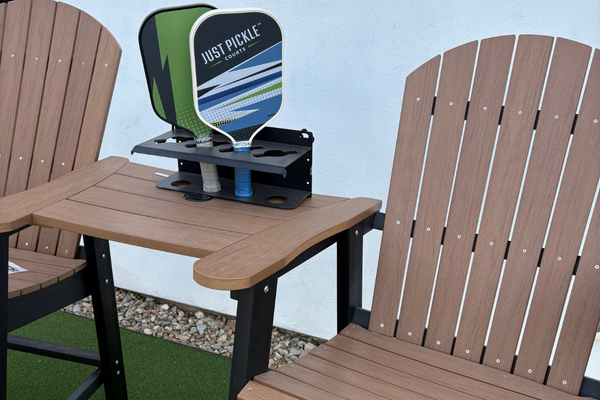
For backyard courts, spectator seating is part of the broader outdoor living design. A few well-chosen pieces make a significant difference: comfortable outdoor chairs or a small sectional positioned with a direct view of the court, a side table for drinks, and enough seating for the typical group size plus a few extras.
The goal for residential courts is integration rather than installation. Seating that feels like a natural part of the outdoor space, connected to an existing patio, shaded by a pergola, and landscaped around, creates an environment that invites people to gather rather than a designated spectator zone that feels like an afterthought.
Built-in bench seating along the court fence is a clean, low-maintenance option that works well for residential builds. A continuous bench along one side with back support, weather-resistant cushions, and a small ledge for drinks creates a comfortable, permanent solution that photographs well and holds up through Arizona seasons.
Club and Community Courts
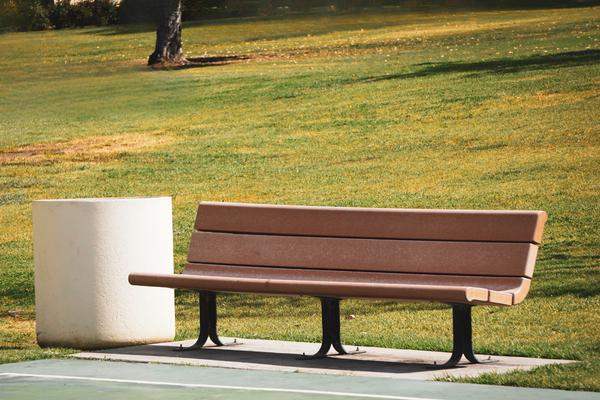
For HOA courts, community centers, and private clubs, the seating investment needs to balance comfort, durability, and maintenance requirements. A few considerations worth prioritizing:
Weather-resistant materials are non-negotiable in Arizona. Powder-coated aluminum frames, recycled plastic lumber, and solution-dyed acrylic fabrics hold up under sustained UV exposure and monsoon moisture far better than wood, standard fabric, or materials not rated for outdoor use.
Shaded seating areas extend usability dramatically. A covered seating zone — whether a pergola, shade sail, or shade structure, adjacent to the court keeps the spectator area functional during the shoulder months when the court itself is comfortable but direct sun makes sitting unpleasant.
Designated spectator areas with clear visual separation from court perimeters improve both safety and the experience. Players and spectators sharing the same undefined space creates constant friction, balls rolling into seating areas, spectators stepping into active play zones, and a general sense of disorganization that reflects on the facility.
Tournament and Event Facilities
Facilities that host tournaments, competitive leagues, or significant community events need to think about spectator seating at a different scale. A few hundred spectators watching finals play requires a fundamentally different setup than casual open play.
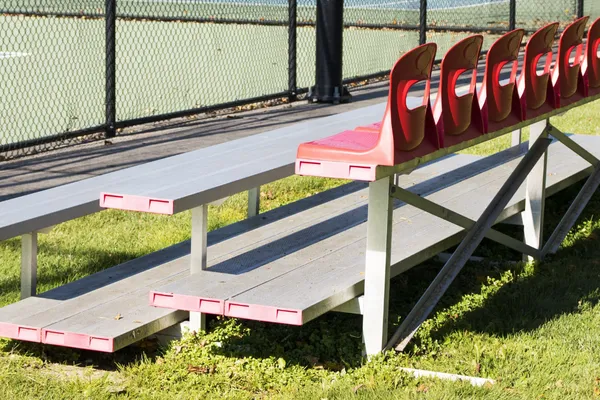
Portable bleacher sections are the most flexible solution for facilities that need event capacity without permanent infrastructure. Modern portable bleachers are lightweight, quick to assemble, and available in configurations that fit most court-side setups. For facilities that host events several times per year, the investment in portable seating that can be deployed when needed and stored when not is significantly more cost-effective than permanent grandstand construction.
For facilities with the budget and the programming to justify it, permanent tiered seating along one end of the facility creates a venue-quality atmosphere that positions the facility as a legitimate event destination. This level of investment makes sense for dedicated pickleball clubs, resort facilities, and community courts designed to host regional or sanctioned tournaments.
Amenities That Elevate the Spectator Experience
Seating is the foundation, but the amenities around it determine whether spectators are comfortable enough to stay for the full session.
Shade and weather protection: Covered seating areas that protect from direct sun and occasional rain are the single most impactful upgrade to any outdoor spectator zone in Arizona. Players and spectators who are comfortable stay longer and return more often.
Beverage and refreshment access: A water station, cooler setup, or small concession area within easy reach of the seating zone eliminates the constant back-and-forth to a distant building. For events, this becomes a revenue opportunity. For daily use, it's a convenience that players and spectators notice and appreciate.
Scoreboards and match displays: A visible scoreboard positioned where spectators can track match progress without asking the players adds a layer of engagement to watching that basic court setups don't offer. For tournaments, this becomes essential. For open play and league nights, it's a welcome addition that makes spectating feel purposeful.
Charging stations and connectivity: Spectators waiting between their own matches or watching a partner play want to stay connected. Outdoor charging stations near the seating area are an increasingly expected amenity at well-run facilities and a small investment relative to the comfort they provide.
Accessible entry and pathways: Clear, unobstructed paths from parking to the spectator area, wide enough for wheelchairs and strollers, signal that the facility was designed with everyone in mind. For facilities serving older adult populations, this matters significantly and affects both attendance and perception.
Designing for Flexibility
The best spectator seating setups for pickleball facilities are ones that work for daily open play and for tournament days without requiring a complete reconfiguration between the two.
Modular seating, chairs, or benches that can be rearranged, supplemented with portable options for events, and stored when not in use, gives facilities the flexibility to serve both formats well. A permanent shaded bench section along one side for daily use, supplemented by portable seating deployed for events, covers most programming scenarios without requiring a facility-wide redesign every time something significant is scheduled.
Planning for this flexibility during the initial design phase is significantly easier than retrofitting it later. Electrical infrastructure for scoreboards and charging stations, anchor points for shade sail tensioning, and defined zones for portable seating deployment are all easier and cheaper to incorporate during construction than to add after the fact.
Spectator comfort is facility revenue. Players who bring friends and family, facilities that attract events, and courts that feel like destinations rather than just playing surfaces all share one thing: they took the space around the court as seriously as the court itself.
The spectator seating investment doesn't have to be dramatic to be meaningful. A shaded seating area with good sight lines, comfortable furniture, and easy access to water is enough to transform the experience for everyone who isn't currently holding a paddle.
At Just Pickle Courts, we design and build complete court environments across Scottsdale and the greater Phoenix area, including the spaces around the court that make everything work better. If you're planning a new facility or upgrading an existing one, schedule a free consultation and let's talk about the full picture.
Contact a Court Planning Specialist to get a custom, no-obligation quote.
Interested in more pickleball content? Follow us on Instagram.