



Choosing the Right Pickleball Net: Permanent vs. Portable Systems
The net is one of the last things most people think about when planning a pickleball court and one of the first things anyone notices when they step onto one. A net that sags, sits at the wrong height, or feels flimsy undermines the playing experience regardless of how well the court surface was built.
If you're building a court or upgrading an existing one, here's what you need to know before you choose.
Why the Net Decision Matters More Than Most People Think
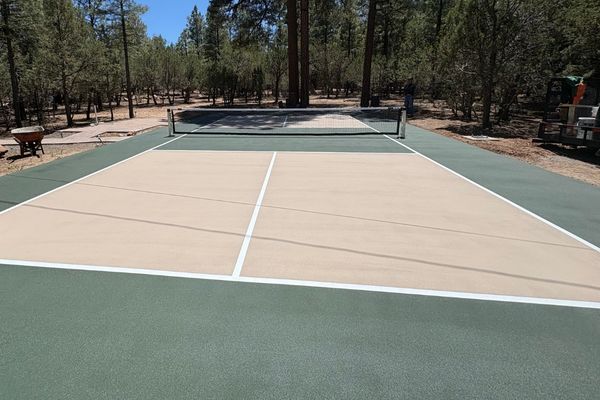
Regulation pickleball nets sit at 34 inches at the center and 36 inches at the sideposts. That height is specific, and it matters; a net that's even an inch off changes how the game plays, particularly around dink exchanges and low drives at the kitchen line.
Beyond height, net tension affects play. A net that sags in the middle creates a false sense of clearance that leads to shots being called differently than they would on a regulation setup. Players who practice on a non-regulation net develop habits that work against them when they play anywhere else.
The right net, installed correctly, is invisible during play. The wrong one is a constant distraction.
Portable Nets
Portable nets are the entry point for most recreational players, and they serve a real purpose: flexibility.
A portable net system can be set up on any flat surface, moved between locations, and stored when not in use. For players who travel to different courts, host games in multiple locations, or are still figuring out how much they'll actually use their court, portable nets are a practical starting point.
What portable nets do well:
Low upfront cost compared to permanent systems
Can be used on any surface, including driveways and gym floors
Easy to move and store when the court isn't in use
Good for temporary or multi-use spaces
Where portable nets fall short:
Height and tension can shift over time and with repeated setup and breakdown
Less stable in wind, which matters for outdoor courts in Arizona
The setup and breakdown process adds friction to every playing session
Most portable systems don't match the feel of a regulation permanent net during play
For a dedicated backyard court used regularly, a portable net is usually a temporary solution that gets replaced once the owner experiences the difference a permanent system makes.
Permanent Net Systems
A permanent net system is anchored into the court surface itself with posts set in concrete or embedded sleeves. The net stays at regulation height, maintains consistent tension, and requires no setup before play.
For a dedicated pickleball court, permanent is almost always the right answer.
What permanent nets do well:
Consistent regulation height and tension every time
More stable and durable in outdoor conditions
No setup required before play; the court is always ready
Better visual appearance that makes the court look finished and intentional
Longer lifespan than portable systems with proper care
Where permanent nets require more consideration:
Higher upfront investment than portable systems
Installation requires proper anchoring into the court surface
Removing or repositioning after installation is not straightforward
Embedded Sleeve Systems
A popular middle ground between fully permanent and portable is an embedded sleeve system. Sleeves are set into the court surface during construction, and the net posts insert into the sleeves when in use; they can be removed and stored when the court is used for other activities.
For courts that double as basketball surfaces or multi-sport spaces, embedded sleeves offer the best of both worlds, a permanent anchoring system with the flexibility to clear the surface when the court is serving a different purpose.
If you're building a multi-sport court, asking your court builder about embedded sleeves during the design phase is significantly easier than retrofitting them after construction is complete.
Net Quality Within Each Category
Not all portable nets are equal, and not all permanent systems are equal. Within each category, quality varies significantly, and the difference shows up in how the net plays and how long it lasts.
For portable nets, look for systems with solid steel frames, consistent center strap tension, and net fabric rated for outdoor UV exposure. Cheap frames bend and corrode. Net fabric that isn't UV-rated fades and weakens quickly under Arizona sun.
For permanent systems, the post material, anchoring method, and net fabric quality all matter. A powder-coated aluminum or galvanized steel post anchored properly into the court surface will outlast a lower-quality system by years. Net fabric with UV-resistant treatment holds its color and tension significantly longer in Arizona's climate than standard fabric.
When in doubt, ask your court builder what systems they recommend and why. A builder who has installed dozens of courts knows which nets hold up in the field and which ones create callbacks.
What Just Pickle Courts Recommends
For any dedicated backyard court, we recommend a permanent or embedded sleeve system from the start. The playing experience is noticeably better, the court always looks finished, and the convenience of walking out to a court that's ready to play without any setup is something every court owner appreciates more with each passing week.
If you're building a multi-sport surface or want the flexibility to clear the net for other activities, an embedded sleeve system gives you permanent-quality anchoring with the option to remove the posts when you need to.
The net conversation is part of every Just Pickle Courts design consultation. If you're planning a build or thinking through your options, schedule your free on-site visit and let's talk through what makes sense for your specific court.
Contact a Court Planning Specialist to get a custom, no-obligation quote.
Interested in more pickleball content? Follow us on Instagram.