


How to Keep Points Moving: Pace, Shot Selection & Simple Rally-Building Techniques
Most recreational pickleball games end too quickly, but they don't have to. By learning how to keep the ball in play, choose the right shot at the right moment, and build a rally with intention, you can outperform the player who relies on power and hope.
Here's how to slow down your decision-making and speed up your improvement.
Pace is a Weapon, Not Just a Default
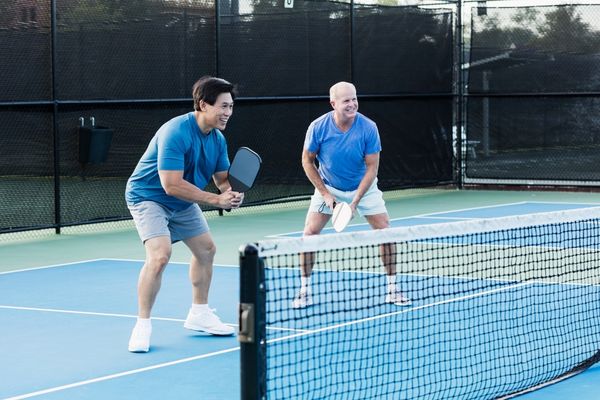
Most beginners play at one speed: as hard as they can. Intermediate players learn something more useful. Pace is a choice, and changing it is one of the most effective ways to disrupt an opponent's rhythm.
Slowing the ball down forces your opponent to generate their own pace, which is harder than it sounds. A well-placed soft shot to the kitchen is far more difficult to attack than a hard drive at chest height. Speeding the ball up at the right moment, after a series of soft exchanges, catches opponents off guard in a way that raw power never does.
The key is intentionality. Every shot you hit should have a purpose behind the pace. Soft when you want to move your opponent forward. Hard when you've created an opening. Medium pace is usually the least useful option because it gives your opponent exactly enough time to reset and exactly enough pace to work with.
Shot Selection: Match the Moment
The most common rally-killing mistake isn't a technical error. It's choosing the wrong shot for the situation.
At the baseline: This is not the place to go for winners. Your job at the baseline is to neutralize, not attack. A deep, controlled return or a well-executed third shot drop gives you time to move forward and puts you in a better position for the next shot. Trying to end the point from the baseline is a low-percentage play that ends rallies before they start.
At the transition zone: The transition zone, the area between the baseline and the kitchen line, is the most dangerous place on the court. You're too close to drive effectively and too far back to volley comfortably. Keep the ball low, move quickly, and get to the kitchen. Don't try to be a hero in no man's land.
At the kitchen line: This is where points are won. Once you're at the net, your shot selection opens up considerably. Dinks to move your opponent side to side, speed-ups when they pop the ball up, and resets when you're out of position. The player who is more patient at the kitchen almost always wins the exchange.
Building a Rally with Intention
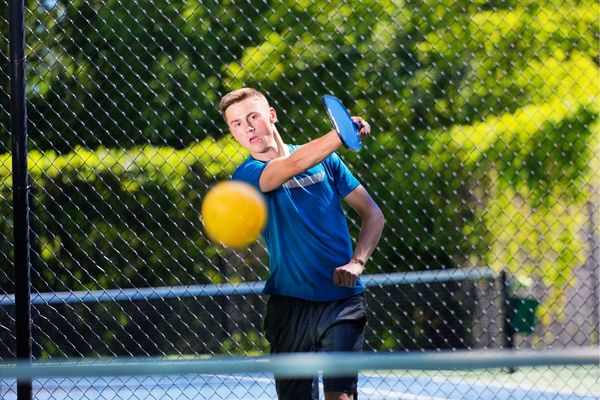
A rally isn't just a series of shots. It's a sequence with a goal. The best players aren't reacting randomly. They're building toward something, setting up a pattern that creates the opening they want.
A few simple rally-building principles that work at every level:
Play to the middle more often. Shots down the middle reduce angles, create confusion between doubles partners, and give you a higher margin for error than sideline attempts. When in doubt, aim middle.
Move your opponent before you attack. A shot to the backhand corner followed by a shot to the forehand creates movement. Movement creates imbalance. Imbalance creates opportunity. Trying to win the point without first moving your opponent is skipping the setup.
Reset before you escalate. When you're out of position or under pressure, the right shot is almost always a soft reset to the kitchen, not an attempted winner. Taking pace off the ball buys you time to recover and puts the pressure back on your opponent to keep attacking. Most opponents won't sustain that pressure for long.
Use the dink to create, not just survive. Too many players treat the dink as a defensive shot. The best dink players use it offensively, moving opponents side to side, pulling them off balance, and waiting for the pop-up that ends the point on their terms.
A Simple Drill to Sharpen All of it
Find a partner and play points with one rule: you have to hit at least five shots before either player can go for a winner. No exceptions.
It feels frustrating at first. That's the point. The constraint forces you to think about shot selection, practice rally construction, and get comfortable in longer exchanges. After a few sessions of this drill, your default instinct in real points shifts from "attack immediately" to "build first." That shift alone will add points to your game faster than any technical fix.
Keeping points moving isn't about being passive. It's about being deliberate. Choosing pace with purpose, matching your shot to the moment, and building rallies with a plan separates players who improve quickly from those who plateau.
The best part is that none of this requires athleticism or power. It requires patience and thinking one shot ahead. Start there, and the rest follows.
Want to put these skills to the test on a court built for serious play? Just Pickle Courts designs and installs professional-grade courts across Scottsdale and the greater Phoenix area. Schedule your free on-site estimate and let's build something worth playing on.
Contact us to schedule a complimentary, no-obligation consultation today.
Interested in more pickleball content? Follow us on Instagram.